

Your Feet Are Talking to Your Brain (And Sending the Wrong Messages)
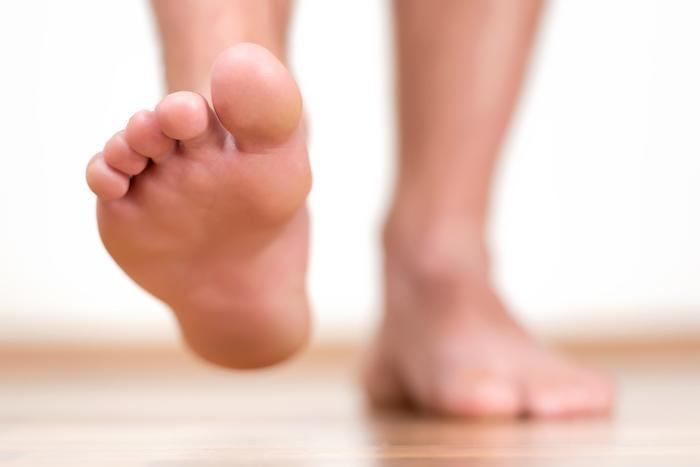
We've spent the last few posts talking about how foot dysfunction affects your knees, hips, and spine through mechanical stress and compensation patterns. But there's another critical connection that most people, and even many healthcare providers, completely miss:
Your feet are one of the most neurologically rich parts of your entire body.
Every step you take sends thousands of nerve signals from your feet to your brain. These signals tell your brain where you are in space, how to balance, which muscles to activate, and how to coordinate movement. Your feet are constantly feeding information to your nervous system and when that information is distorted by collapsed arches, your entire nervous system suffers.
This is the hidden connection between foot dysfunction and problems that seem completely unrelated: poor balance, coordination issues, chronic pain sensitivity, difficulty concentrating, fatigue, and even anxiety.
Let me show you how your feet control far more than just your posture; they're actually controlling how your brain perceives and responds to your entire world.
Your Feet: The Most Underrated Sensory Org ans
ans
Think about this: each of your feet contains:
- Over 200,000 nerve endings (some estimates put it as high as 7,000 per square inch on the sole)
- 26 bones with proprioceptive sensors in every joint
- 33 joints that all send position and movement feedback
- More than 100 muscles, tendons, and ligaments filled with mechanoreceptors
- Specialized pressure sensors in the skin that detect texture, temperature, and force
Your feet have more nerve endings per square inch than almost any other part of your body except your hands and face. They're designed to be incredibly sensitive information-gathering systems.
Here's what your feet are constantly telling your brain:
- Where the ground is
- What surface you're on (hard, soft, slippery, uneven)
- How your weight is distributed
- Where your body is in space (proprioception)
- How fast you're moving
- Whether you're balanced or falling
- Which muscles need to activate to keep you stable
This information flows up through your spinal cord to multiple areas of your brain: your cerebellum (coordination center), your brainstem (automatic postural control), and your cortex (conscious awareness and movement planning).
The critical insight: When your feet dysfunction, when arches collapse, joints stiffen, or alignment shifts, they send distorted, inaccurate, or incomplete information to your brain. And your brain makes decisions based on faulty data.
The Proprioceptive Crisis: When Your Brain Doesn't Know Where You Are
Proprioception is your body's ability to sense where it is in space without looking. Close your eyes and touch your nose, that's proprioception. Stand on one leg, that's proprioception keeping you balanced.
Your feet are the foundation of your proprioceptive system. They're your primary contact point with the world and the main source of information about your position and movement.
What Happens When Foot Proprioception Degrades
Collapsed arches reduce proprioceptive input:
When arches flatten:
- Joint position sensors (mechanoreceptors) in foot joints get compressed and distorted
- The muscles that normally provide dynamic feedback become overstretched and less responsive
- Pressure sensors in the sole experience abnormal, uneven loading
- The variety and quality of sensory information decreases
Stiff, immobile feet reduce proprioceptive feedback:
When joints don't move properly:
- Proprioceptors in and around joints stop firing as frequently
- Your brain receives less information about foot position and movement
- The cerebellum gets incomplete data about where your feet are
- Movement coordination suffers
The brain's response to poor proprioception:
When your brain doesn't get clear information from your feet:
- Balance deteriorates (especially with eyes closed or in the dark)
- Fall risk increases (particularly in older adults)
- Movement becomes clumsy or uncoordinated
- The brain relies more on vision to compensate (you have to watch your feet more)
- Reaction time slows (your brain is uncertain and hesitates)
- Muscle activation patterns become less efficient
The research connection: Studies show that people with flat feet have significantly reduced proprioceptive accuracy compared to those with normal arches. One study found that individuals with pronated feet had 35% worse balance scores and took 50% longer to respond to perturbations (unexpected shifts) compared to those with neutral foot alignment.
This isn't just about balance, it's about how efficiently your nervous system can control your entire body.
The Sensorimotor Integration Problem: Garbage In, Garbage Out
Your nervous system works on a simple principle: sensory input drives motor output.
In other words, the quality of information coming IN (from your feet, joints, muscles, skin) directly determines the quality of movement going OUT (muscle activation, coordination, balance).
The sensorimotor loop:
- Sensory receptors in your feet gather information
- Nerves carry that information up to your spinal cord and brain
- Your brain processes the information and makes decisions
- Motor commands travel back down to muscles
- Muscles contract to create movement or maintain stability
- The cycle repeats thousands of times per minute
When this loop is working properly, movement is smooth, coordinated, efficient, and automatic. You don't have to think about walking or standing; your nervous system handles it unconsciously.
But when foot dysfunction disrupts the sensory input:
Garbage in (distorted foot signals):
- Collapsed arches send abnormal pressure information
- Stiff joints send diminished position information
- Overstretched ligaments send poor tension feedback
- Pronated feet send rotational stress signals
Garbage out (compensatory motor patterns):
- Muscles fire in abnormal sequences
- Some muscles over-activate (get tight and overworked)
- Other muscles under-activate (get weak and inhibited)
- Coordination becomes inefficient
- Energy expenditure increases
- Pain and fatigue develop
This is why people with foot dysfunction often feel clumsy, unstable, or "off-balance" even when they're not actively in pain. Their nervous system is operating with corrupted data.
Real Patient Story: The Balance Problem Nobody Could Explain
Meet Robert, a 68-year-old retired engineer who came to see me after falling twice in the past year. His doctor had ordered balance testing and prescribed physical therapy for "age-related balance decline." But Robert was frustrated; he'd always been active and athletic, and he didn't feel "old."
His balance testing showed significant deficits, especially with eyes closed. His physical therapist worked on balance exercises for three months with minimal improvement.
Here's what I found:
At his feet:
- Severe bilateral flat feet (both arches completely collapsed)
- Stiff foot joints with minimal mobility
- Feet turned outward significantly when standing
- Uneven pressure distribution on foot scan
Neurological testing:
- Proprioception testing: Poor accuracy in identifying foot position with eyes closed
- Romberg test (standing with eyes closed): Significant swaying and instability
- Single leg stance: Unable to maintain for more than 3 seconds
- Tandem walking (heel-to-toe): Required visual focus, couldn't do with eyes closed
But here's the key finding:
When I placed temporary orthotics under his feet to support his arches and improve alignment, his balance improved IMMEDIATELY, even before any adjustments. His single-leg stance time doubled, and his Romberg swaying decreased noticeably.
Why? The orthotics instantly changed the sensory input from his feet. By supporting the arches and improving joint alignment, we immediately improved the quality and quantity of proprioceptive information reaching his brain.
The treatment plan:
- Custom orthotics to restore arch support and improve foot proprioception
- Chiropractic adjustments to restore mobility to stiff foot and ankle joints
- Proprioceptive retraining exercises (balance work on various surfaces)
- Gait training to reprogram movement patterns
The results: Within 8 weeks, Robert's balance scores improved by over 60%. He could stand on one leg with eyes closed for 15+ seconds. He felt confident and stable again. His "age-related balance decline" wasn't age, it was corrupted sensory information from dysfunctional feet.
The Pain Amplification Effect: How Foot Dysfunction Sensitizes Your Nervous System
Here's something most people don't realize: chronic pain isn't just about tissue damage, it's about how your nervous system processes and amplifies pain signals.
When you have persistent foot dysfunction, several neurological processes occur that actually increase your pain sensitivity throughout your entire body:
Central Sensitization from Chronic Foot Pain
What is central sensitization? It's when your central nervous system (brain and spinal cord) becomes hyperexcitable and overreacts to pain signals. Think of it like turning up the volume on your pain receptors.
How foot dysfunction contributes:
- Constant abnormal input from dysfunctional feet creates chronic low-level pain signals
- The nervous system adapts by becoming more sensitive to these signals
- The pain threshold lowers, signals that shouldn't hurt now do
- The pain spreads, areas that were fine start hurting (knees, hips, back)
- Pain persists even after tissue healing because the nervous system is stuck in high-alert mode
The research: Studies show that people with chronic foot pain (like plantar fasciitis) often develop central sensitization, showing increased pain sensitivity not just in their feet, but throughout their body. They react more strongly to pressure, temperature changes, and mechanical stress everywhere.
The Stress Response Amplification
Remember our discussion about sympathetic nervous system overdrive? Foot dysfunction contributes to this in a direct way:
Chronic pain from dysfunctional feet:
- Activates stress response pathways
- Elevates cortisol chronically
- Keeps sympathetic nervous system in overdrive
- Reduces parasympathetic (healing) activity
- Impairs sleep quality
- Increases systemic inflammation
This creates a vicious cycle: Poor foot mechanics → Pain → Stress response → Increased pain sensitivity → More pain → More stress response
The Gait-Brain Connection: How Walking (Or Not Walking) Affects Your Brain
Your brain doesn't just control how you walk, walking actually affects how your brain functions.
Every time you take a step, you're sending rhythmic, organized sensory input to your brain. This input has profound effects on:
Cerebellar Stimulation
Your cerebellum (the coordination center at the back of your brain) thrives on rhythmic, repetitive movement input. Walking provides exactly that.
Healthy gait:
- Provides rich, varied proprioceptive input
- Stimulates cerebellar pathways
- Improves coordination and motor planning
- Enhances cognitive function
Dysfunctional gait from foot problems:
- Provides distorted, inconsistent input
- Reduces cerebellar stimulation
- Impairs coordination
- Can contribute to cognitive decline over time
The research: Studies show that gait dysfunction is associated with increased risk of cognitive decline and dementia in older adults. While correlation isn't causation, the connection between movement quality and brain health is clear.
Vestibular Integration
Your vestibular system (inner ear balance centers) works closely with proprioceptive input from your feet. Together, they tell your brain about your position, movement, and balance.
When foot proprioception is poor:
- Vestibular system has to work harder to compensate
- Integration between systems becomes less efficient
- Dizziness, vertigo, or motion sensitivity can develop
- Spatial awareness decreases
Brain Oxygenation and Blood Flow
Here's a fascinating finding: the impact forces from walking actually help pump blood and cerebrospinal fluid up to your brain.
Each heel strike creates a pressure wave that travels up through your skeleton and helps circulate blood and fluid. This is called the "venous pump" mechanism.
When gait is dysfunctional:
- Heel strike forces are abnormal (too soft, too hard, or asymmetrical)
- The pumping mechanism is less efficient
- Brain blood flow may decrease
- Cerebrospinal fluid circulation slows
- This can contribute to brain fog, cognitive fatigue, and reduced mental clarity
The connection: Some researchers believe this is one mechanism linking foot dysfunction to cognitive symptoms like poor concentration, mental fatigue, and "foggy" thinking.
The Foot-Brain Feedback Loop: Adjustments Reset the System
This is where chiropractic care becomes crucial and why adjusting the feet and spine creates such profound neurological effects.
What happens when we adjust your feet:
Immediate Proprioceptive Reset
When a foot joint is adjusted:
- Joint mechanoreceptors (position sensors) fire intensely
- This sends a burst of high-quality proprioceptive information to the brain
- The brain receives a "reset signal" about proper joint position
- Motor patterns can immediately reorganize
This is why patients often report:
- "I feel more grounded"
- "My balance feels better right away"
- "I feel more connected to my feet"
- "My whole body feels more stable"
Reduced Pain Signaling
Adjustments stimulate large-diameter nerve fibers that:
- Inhibit pain signals via the "gate control theory"
- Reduce pain perception
- Lower muscle tension
- Decrease protective guarding patterns
Autonomic Nervous System Regulation
Adjustments to the feet and spine:
- Reduce sympathetic (stress) nervous system activity
- Increase parasympathetic (healing) nervous system activity
- Lower cortisol levels
- Improve heart rate variability (a marker of nervous system health)
The research: Studies using heart rate variability monitoring show that spinal adjustments create measurable shifts toward parasympathetic dominance, essentially moving the nervous system from "stressed" to "healing" mode.
Motor Pattern Reprogramming
After adjustments restore proper joint mechanics and proprioceptive input:
- The brain receives accurate information about joint position
- Motor planning improves
- Muscle activation patterns can reorganize
- Movement becomes more efficient and coordinated
But here's the key: These changes are most sustainable when we address BOTH the feet (with orthotics providing structural support) AND the spine (with adjustments restoring proper mechanics and neural input).
The Complete Neurological Solution: Orthotics + Adjustments + Retraining
To truly optimize foot-brain communication and restore proper sensorimotor integration, we need a three-part approach:
1. Structural Support (Custom Orthotics)
What orthotics do for your nervous system:
- Restore normal pressure distribution across the sole (improves sensory input quality)
- Support arches to optimize joint position (improves proprioceptive accuracy)
- Control pronation to reduce rotational stress signals (decreases abnormal input)
- Provide consistent, predictable ground contact (stabilizes sensory environment)
- Create a foundation for proper movement patterns (enables motor learning)
The immediate effect: Patients often notice better balance and stability the first time they stand on properly fitted orthotics.
2. Joint Mobilization (Chiropractic Adjustments)
What adjustments do for your nervous system:
- Restore mobility to restricted joints (increases proprioceptive input)
- Reset joint mechanoreceptors (improves position sense)
- Reduce pain signaling (lowers nervous system sensitivity)
- Stimulate cerebellar pathways (enhances coordination)
- Improve sensorimotor integration (better input → better output)
- Regulate autonomic nervous system (reduces stress response)
The progressive effect: With regular adjustments, the nervous system gradually reorganizes and establishes new, healthier movement patterns.
3. Neurological Retraining (Specific Exercises)
What retraining does:
- Challenges balance and proprioception progressively
- Forces the brain to process improved sensory input
- Strengthens new motor patterns
- Builds confidence in movement
- Creates lasting neurological adaptation
Examples of proprioceptive retraining:
- Standing on one leg with eyes closed
- Balance board exercises
- Walking on varied surfaces (foam, gravel, uneven ground)
- Tandem walking (heel-to-toe)
- Specific foot strengthening exercises (toe spreading, arch lifts)
The synergistic effect: Orthotics provide the foundation, adjustments reset the system, and retraining locks in the changes. Together, they create lasting neurological adaptation.
The Neurological Warning Signs of Foot Dysfunction
How do you know if your foot dysfunction is affecting your nervous system? Look for these signs:
Balance and Coordination Issues:
- Feeling unsteady or "off-balance" frequently
- Difficulty balancing on one leg
- Needing to look at your feet when walking on uneven surfaces
- Stumbling or tripping more than you used to
- Poor performance in activities requiring coordination
Proprioceptive Deficits:
- Difficulty walking in the dark or with eyes closed
- Feeling disconnected from your feet
- Uncertainty about foot position without looking
- Delayed reactions to slips or perturbations
Sensory Changes:
- Numbness or tingling in feet (always get this medically evaluated first)
- Altered sensation—feet feel "weird" or "different"
- Increased pain sensitivity (even light touch hurts)
- Temperature sensitivity in feet
Cognitive and Mental Effects:
- Brain fog or difficulty concentrating
- Mental fatigue, especially after standing or walking
- Increased anxiety (nervous system in sympathetic overdrive)
- Poor sleep quality (pain disrupting rest cycles)
Widespread Pain:
- Pain that has spread from feet to knees, hips, back
- Pain that seems out of proportion to tissue damage
- Pain that persists despite treatment of injured area
- Morning stiffness throughout the body
Your Foot-Brain Action Plan
If you recognize these neurological symptoms, here's your path forward:
Step 1: Comprehensive Neurological Assessment
Get evaluated for:
- Proprioceptive accuracy
- Balance testing (static and dynamic)
- Gait analysis
- Foot mechanics and arch integrity
- Spinal alignment and mobility
- Sensorimotor integration
Step 2: Address the Foundation
- Custom orthotics to restore normal sensory input
- Proper footwear that allows natural foot function
- Barefoot time on varied surfaces when safe (to stimulate mechanoreceptors)
Step 3: Restore Proper Mechanics
- Regular chiropractic adjustments (feet, ankles, spine)
- Joint mobilization for restricted areas
- Soft tissue work to release compensation patterns
Step 4: Retrain the Nervous System
- Progressive balance and proprioceptive exercises
- Gait retraining
- Coordination drills
- Functional movement patterns
Step 5: Support Nervous System Health
- Adequate sleep (when the nervous system recovers)
- Stress management (reduces central sensitization)
- Anti-inflammatory nutrition (reduces nervous system irritation)
- Regular movement throughout the day
The Bottom Line: Your Feet Control More Than You Think
Your feet aren't just mechanical structures that carry your weight. They're sophisticated sensory organs that constantly feed information to your brain about where you are, how to move, and whether you're safe.
When foot function deteriorates—when arches collapse, joints stiffen, or alignment shifts—the entire nervous system suffers. Balance degrades. Coordination declines. Pain sensitivity increases. Movement becomes inefficient. The brain receives corrupted data and makes poor decisions.
But here's the remarkable part: when we restore proper foot function through structural support (orthotics) and proper mechanics (adjustments), the nervous system can reorganize rapidly. Balance improves. Coordination returns. Pain sensitivity decreases. Movement becomes fluid again.
Your brain is only as good as the information it receives. Give it clean data from healthy feet, and watch what happens.
Before you accept balance problems as "just aging," before you resign yourself to feeling unsteady or clumsy, before you assume your chronic pain is permanent—check the quality of the information your feet are sending to your brain.
The solution might be simpler than you think: support the foundation, restore the mechanics, retrain the system.
FOOT-BRAIN CONNECTION ASSESSMENT
Experiencing balance issues, coordination problems, or unexplained widespread pain?
Get our Complete Posture and Foot Assessment:
- Digital Foot Scan
- Gait Analysis
- Posture Evaluation
- Orthotic Consultation
Special FREE Offer During the Month of March
Your nervous system deserves accurate information. Let's fix the signal at the source.
Call today to schedule your Foot-Brain Connection Assessment and discover how your feet are affecting your entire nervous system.
Scientific References:
Haddad JM, et al. (2006). Task-dependent postural control throughout the lifespan. Exercise and Sport Sciences Reviews, 34(2), 49-53.
Hertel J. (2008). Sensorimotor deficits with ankle sprains and chronic ankle instability. Clinics in Sports Medicine, 27(3), 353-370.
Horak FB. (2006). Postural orientation and equilibrium: what do we need to know about neural control of balance to prevent falls? Age and Ageing, 35(S2), ii7-ii11.
Kauffman TL, et al. (2014). Geriatric Rehabilitation Manual. Churchill Livingstone.
Menz HB, et al. (2013). Walking stability and sensorimotor function in older people with diabetic peripheral neuropathy. Archives of Physical Medicine and Rehabilitation, 85(2), 245-252.
Peterka RJ. (2002). Sensorimotor integration in human postural control. Journal of Neurophysiology, 88(3), 1097-1118.
Rome K, et al. (2009). The relationship between foot posture and balance and injury in elite footballers. International Journal of Sports Medicine, 30(7), 530-534.
Tsao H, Hodges PW. (2007). Immediate changes in feedforward postural adjustments following voluntary motor training. Experimental Brain Research, 181(4), 537-546.
Wallmann HW. (2001). Comparison of elderly nonfallers and fallers on performance measures of functional reach, sensory organization, and limits of stability. Journals of Gerontology Series A, 56(9), M580-M583.


MAP
© 2026 Mind Body Spine Chiropractic. All Rights Reserved. Accessibility Statement - Privacy Policy - Terms and Services - Sitemap
Powered by: 