

Golf Feet
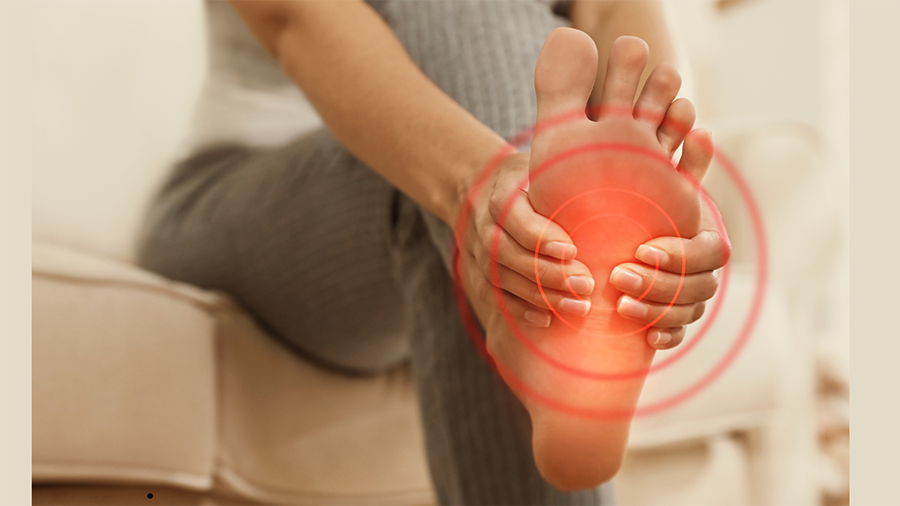
Your Golf Game Starts at the Ground: What Your Feet Are Doing to Your Swing
Most golfers never think about their feet. But here is the reality: your feet are the only part of your body touching the ground during the entire golf swing. They are the starting point of every bit of power you generate, and the foundation everything else is built on.
When your feet are not supported properly, the effects ripple upward through your ankles, knees, hips, and back, showing up as swing faults, lost distance, and pain that seems unrelated to your feet at all.
The Research Is Compelling
The most referenced study on orthotics and golf was conducted by Dr. David Stude and published in the Journal of Manipulative and Physiological Therapeutics. Twelve experienced golfers wore Foot Levelers custom orthotics daily for six weeks. The results were striking:
- Clubhead speed increased by 3–5 mph: roughly a 7% gain
- Driving distance improved by 9–15 yards
- Pelvic rotation increased by 29–36%
- Balance and proprioception improved significantly
- Fatigue across nine holes was meaningfully reduced
That pelvic rotation finding deserves attention. More hip turn means more separation between the hips and shoulders, more coil, more stored energy, more power at impact. Getting that from foot support alone is a significant result.
Why Your Feet Affect So Much

Two of the most common foot patterns that affect golfers:
Overpronation (flat arches, ankle rolling inward) causes a chain reaction up the leg: the knee collapses, the hip loses rotation, and the pelvis cannot clear properly through impact. This is a direct physical driver of early extension, one of the most common swing faults in amateur golf.
High arches (supination) reduce the foot's ability to absorb and adapt to ground forces, creating an unstable base and increasing the risk of ankle issues, particularly during the follow-through phase of the swing.
What Makes Foot Levelers Different
Most insoles only support one arch, the inner arch most people think of. Foot Levelers custom orthotics are built around the concept of the three-arch system: the inner arch, outer arch, and the arch across the ball of the foot. Supporting all three creates a more stable and complete foundation.
The ParFlex Plus is Foot Levelers' golf-specific orthotic, designed with a flexible shell that works with the dynamic movements of the swing rather than blocking them. It is custom-made from a weight-bearing scan of your foot, not a generic template, so it matches your unique structure.
Who Benefits Most
While most golfers can benefit from better foot support, some situations make orthotics especially worthwhile:
- Flat feet or overpronation contributing to hip and back problems
- High arches and lateral ankle instability
- Foot, knee, or lower back pain during or after golf
- Noticing your ball-striking gets worse as the round goes on
- Aging golfers whose fatigue tolerance across 18 holes has declined
That last point matters: the Stude research showed orthotics do not just improve mechanics acutely; they slow down how quickly your mechanics degrade as fatigue sets in. If your back nine always looks worse than your front nine, this may be part of the reason.
A Simple Starting Point
If you have never had your foot mechanics assessed in relation to your golf game, it is worth doing. We use a weight-bearing foot scan to evaluate all three arches and identify how your foot structure may be affecting your swing and your body.
It is one of the quickest and most overlooked improvements available to a golfer, and the research backs it up.
References:
Stude DE, Gullickson J. Effects of orthotic intervention and nine holes of simulated golf on club-head velocity. Journal of Manipulative and Physiological Therapeutics. 2001.
Stude DE, Gullickson J. The effects of orthotic intervention and 9 holes of simulated golf on gait in experienced golfers. Journal of Manipulative and Physiological Therapeutics. 2001.
Effect of foot orthoses on balance among individuals with flatfoot: systematic review and meta-analysis. PLOS One. 2024.


MAP
© 2026 Mind Body Spine Chiropractic. All Rights Reserved. Accessibility Statement - Privacy Policy - Terms and Services - Sitemap
Powered by: 